
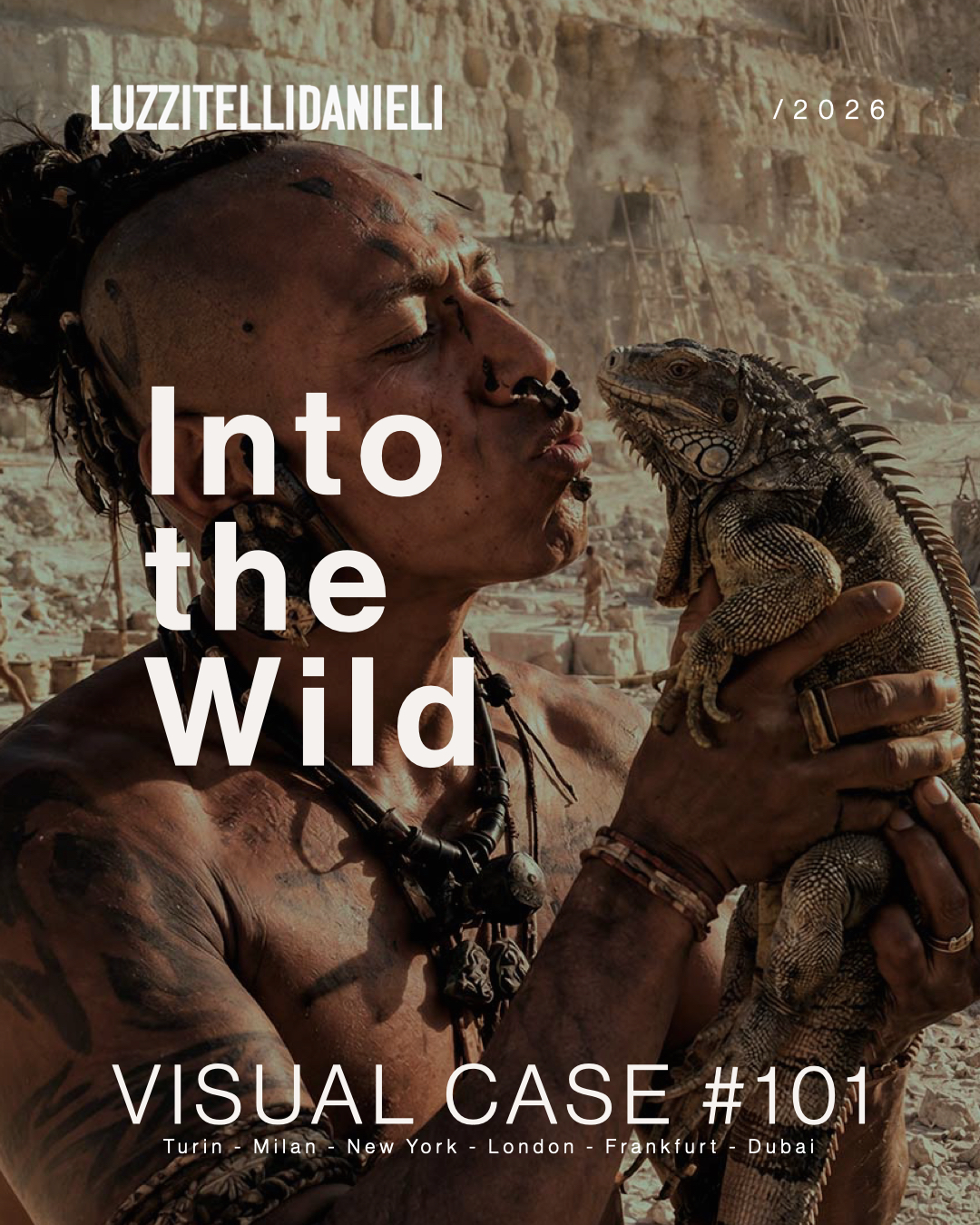
INTO THE WILD
A Hybrid Automotive Visual Experiment in Photography, CGI and AI
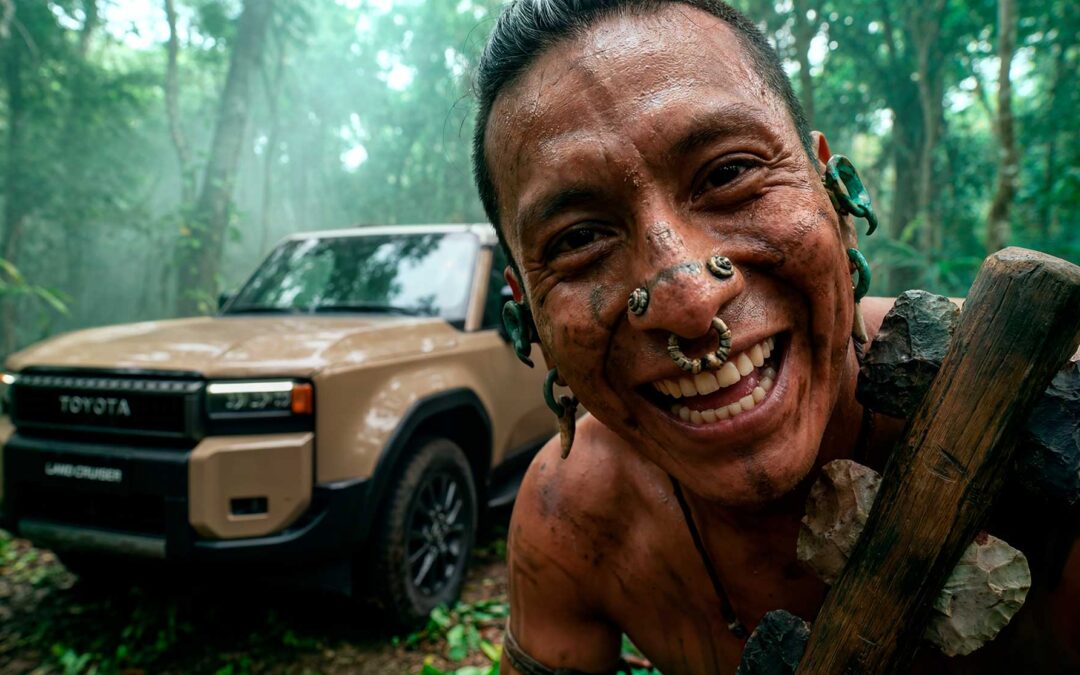
A contemporary automotive icon enters a world that feels ancient, untamed and completely outside its own time.
For this personal project, we developed an original automotive narrative inspired by the visual language of Apocalypto— its dense jungle, earthy palette, physical intensity and cinematic approach to natural light.
The objective was not to recreate the film.
It was to use its visual principles as a starting point for creating a new world.
A world where contemporary automotive design meets an environment shaped by nature, instinct and survival.

ONE IMAGE. THREE PRODUCTION LANGUAGES.
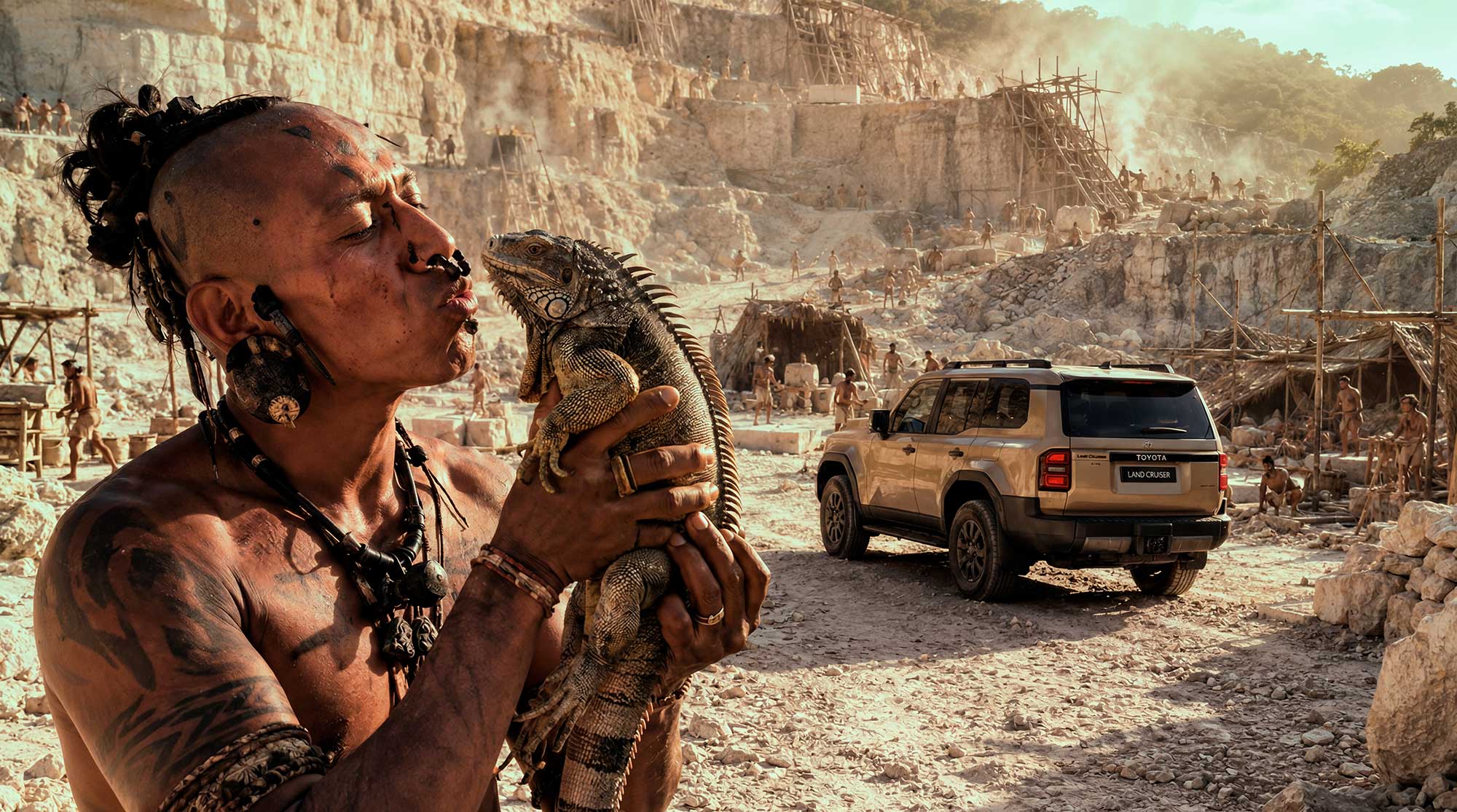
The project was conceived as a hybrid visual production, combining photography, CGI and AI within a single controlled creative direction.
The vehicle was developed in CGI, giving us precise control over its geometry, materials, reflections, camera position and interaction with light.
The human characters were created through AI, allowing us to construct their appearance, expressions, clothing and physical characteristics specifically for the narrative.
Photography formed the visual foundation of the project, bringing a photographic sensibility to the final image through camera perspective, light, texture and atmosphere.
The objective was never to showcase the technologies themselves.
It was to make them disappear into the image.
BUILDING THE WORLD
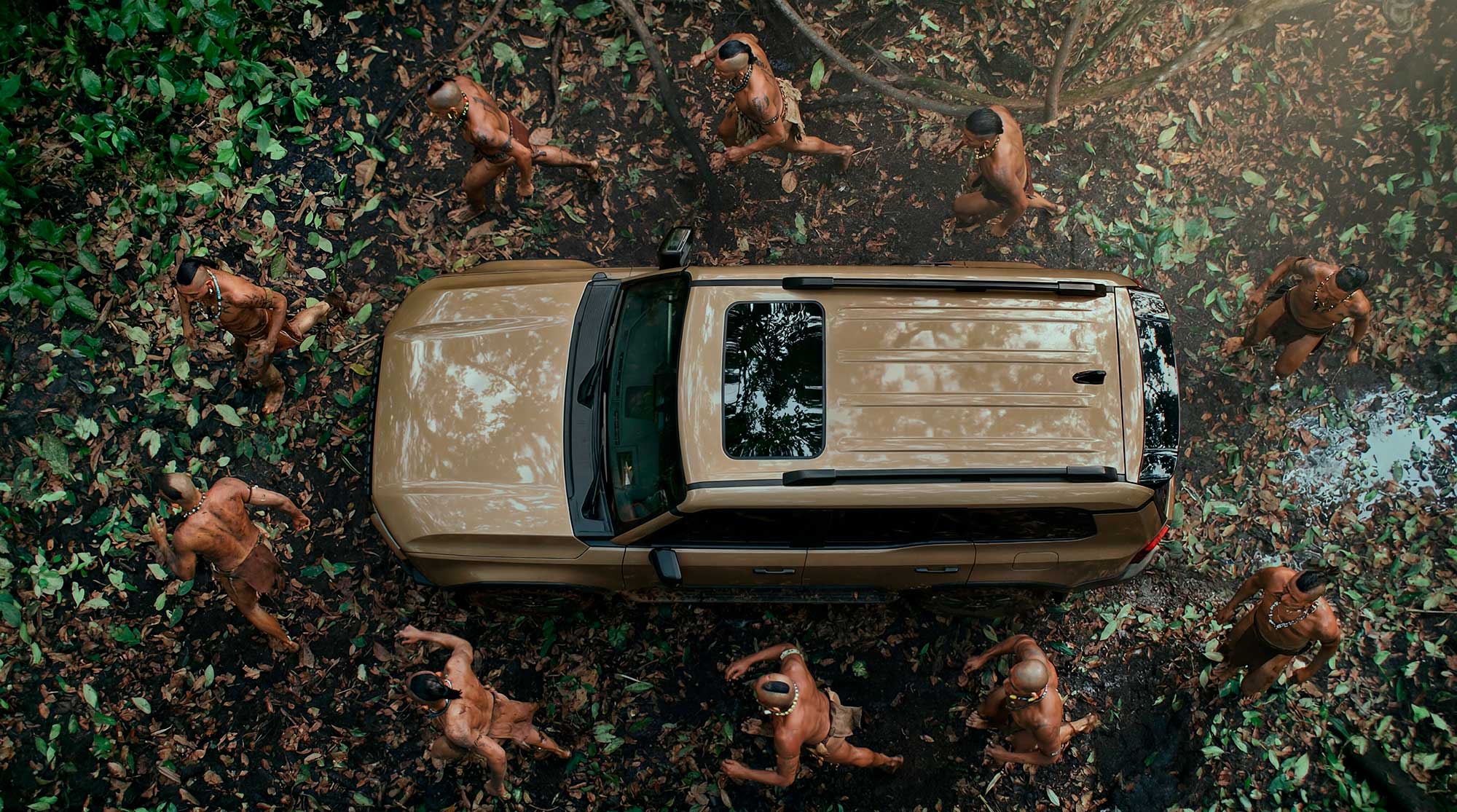
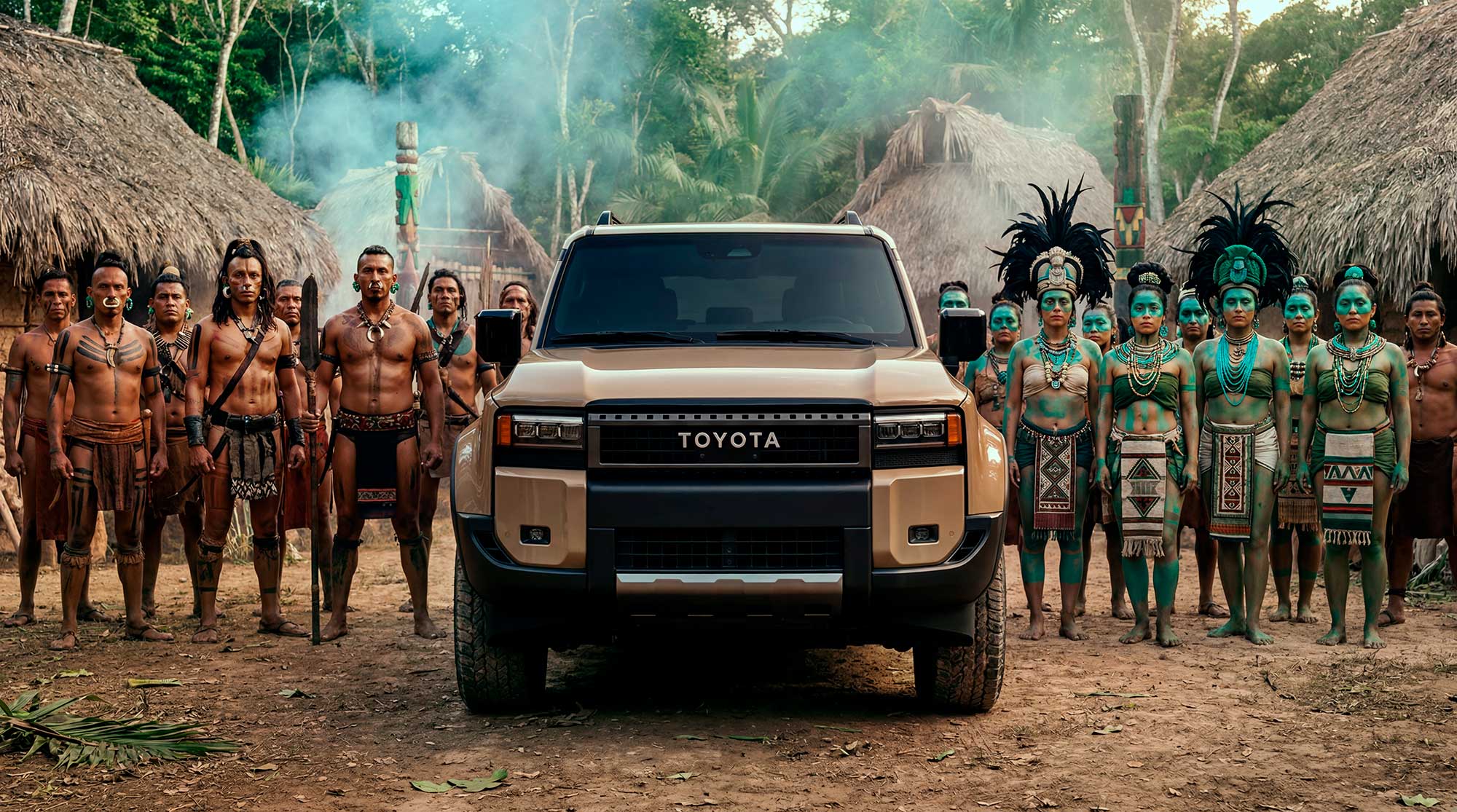
The jungle was not conceived as a backdrop.
It became an essential part of the visual narrative.
Dense vegetation, humidity, atmospheric depth, natural light and deep shadows were constructed to create a world that feels physical and immediate.
Against this organic environment, the Toyota becomes an element of contrast.
Its precise geometry and contemporary design introduce a sense of technology and control into an environment defined by unpredictability.
Modern technology. Ancient wilderness.
The tension between these two worlds became the central visual idea of the project.
o every other medium.
THE HUMAN ELEMENT
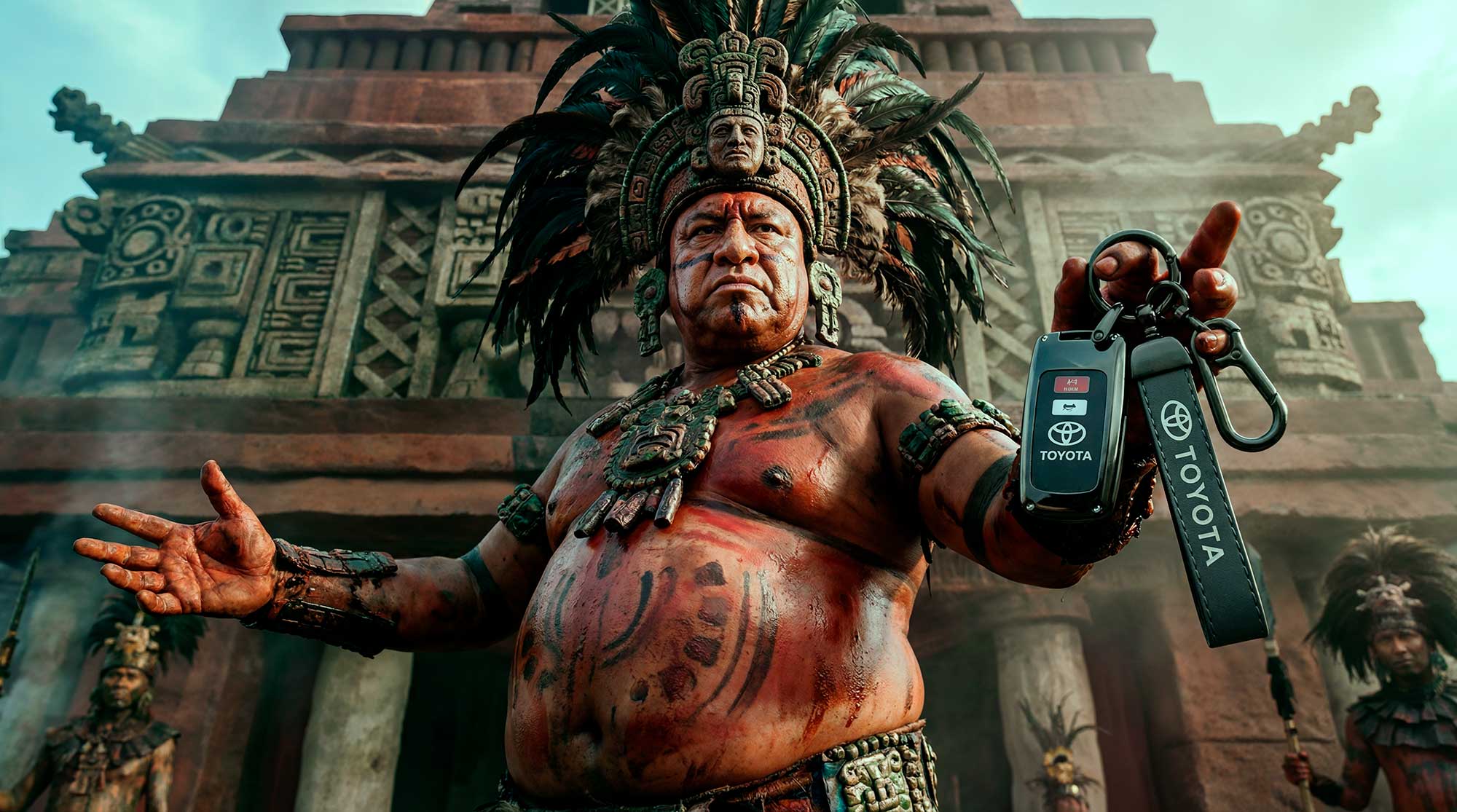
The characters were entirely developed through AI and directed as integral elements of the composition.
Their role was not simply to populate the environment.
They had to belong to it.
Physical characteristics, skin texture, clothing, expressions, imperfections and signs of contact with the environment were carefully considered to create a sense of presence and continuity with the world around them.
The main character was developed with particular attention to human expression and physical realism.
Sweat, dirt, skin texture, scars and natural imperfections became important visual elements.
Because realism is rarely created by perfection.
It is created by detail.

A PALETTE BUILT AROUND THE FILM
The visual palette was one of the key elements of the art direction.
Taking inspiration from Apocalypto, we worked around a range of deep jungle greens, muted earth tones, warm skin tones, dark browns and controlled highlights.
Rather than treating color as a final grade, we used it as part of the image construction from the beginning.
The same chromatic logic had to connect the vehicle, characters, vegetation, atmosphere and light.
This allowed elements created through different production techniques to occupy the same visual world.
The result is intentionally far removed from the polished, highly controlled aesthetic traditionally associated with automotive advertising.
The image needed to feel:
humid.
raw.
physical.
unpredictable.

CGI WITH A PHOTOGRAPHIC MINDSET
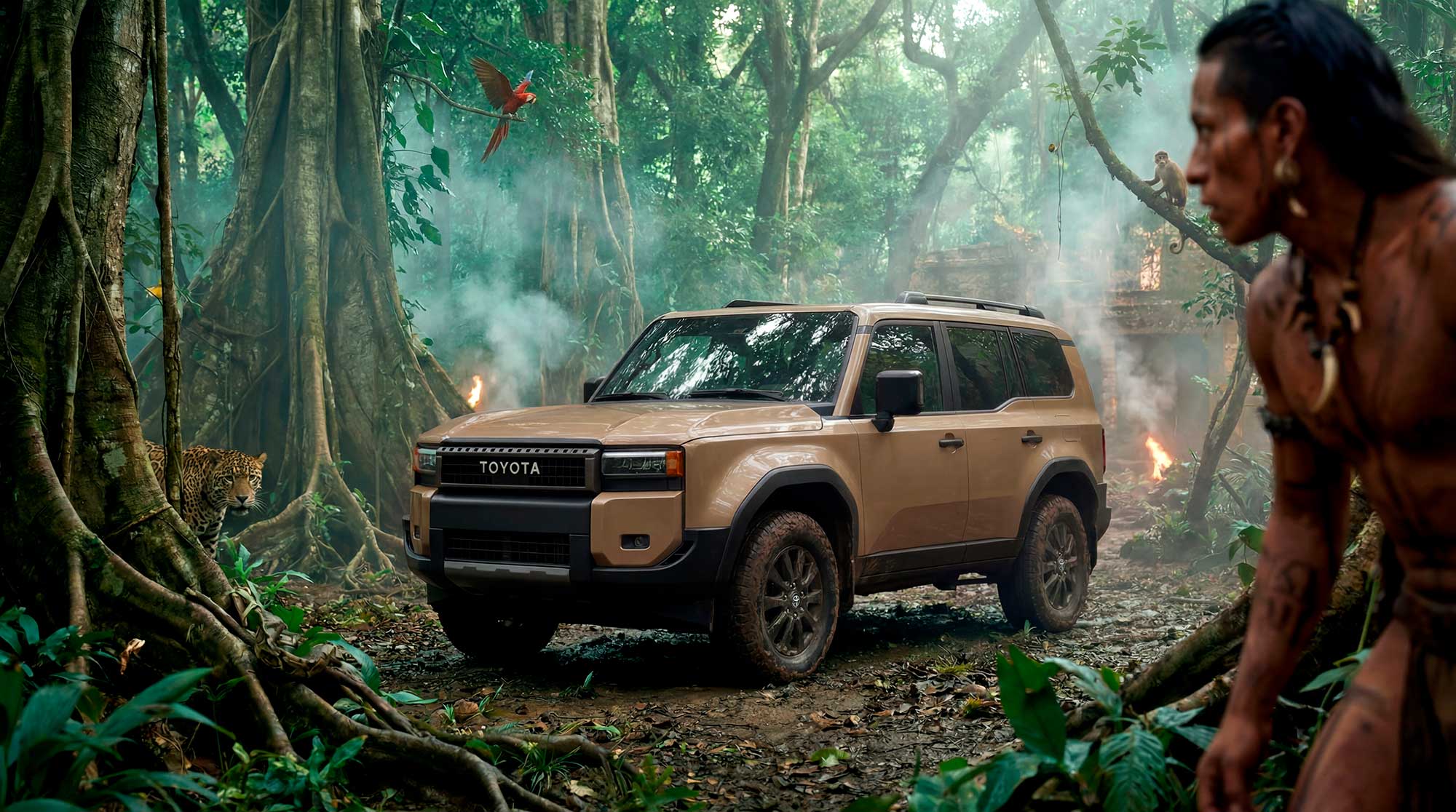
The vehicle was created entirely in CGI.
But the objective was never to create an image that looked like a CGI render.
We approached the vehicle as if it were being photographed inside a real jungle.
Camera perspective, lens behavior, depth of field, reflections, material response and natural light were considered from a photographic point of view.
This is central to our approach to CGI.
CGI is not the final image.
It is a way of building the final image.
The technology remains invisible when the visual direction is strong enough.
AI AS PART OF THE ART DIRECTION
AI was used primarily for the creation and development of the human characters, together with selected elements of the visual environment.
But the process did not begin with a prompt.
It began with an image, a composition and a visual intention.
The environment, camera position, relationship between the character and the vehicle, lighting direction and color palette were established first.
AI was then integrated into the production process as another creative tool.
This distinction matters.
We are not interested in what AI can generate in isolation.
We are interested in what can be created when AI is placed inside a controlled visual production process.
THE RESULT
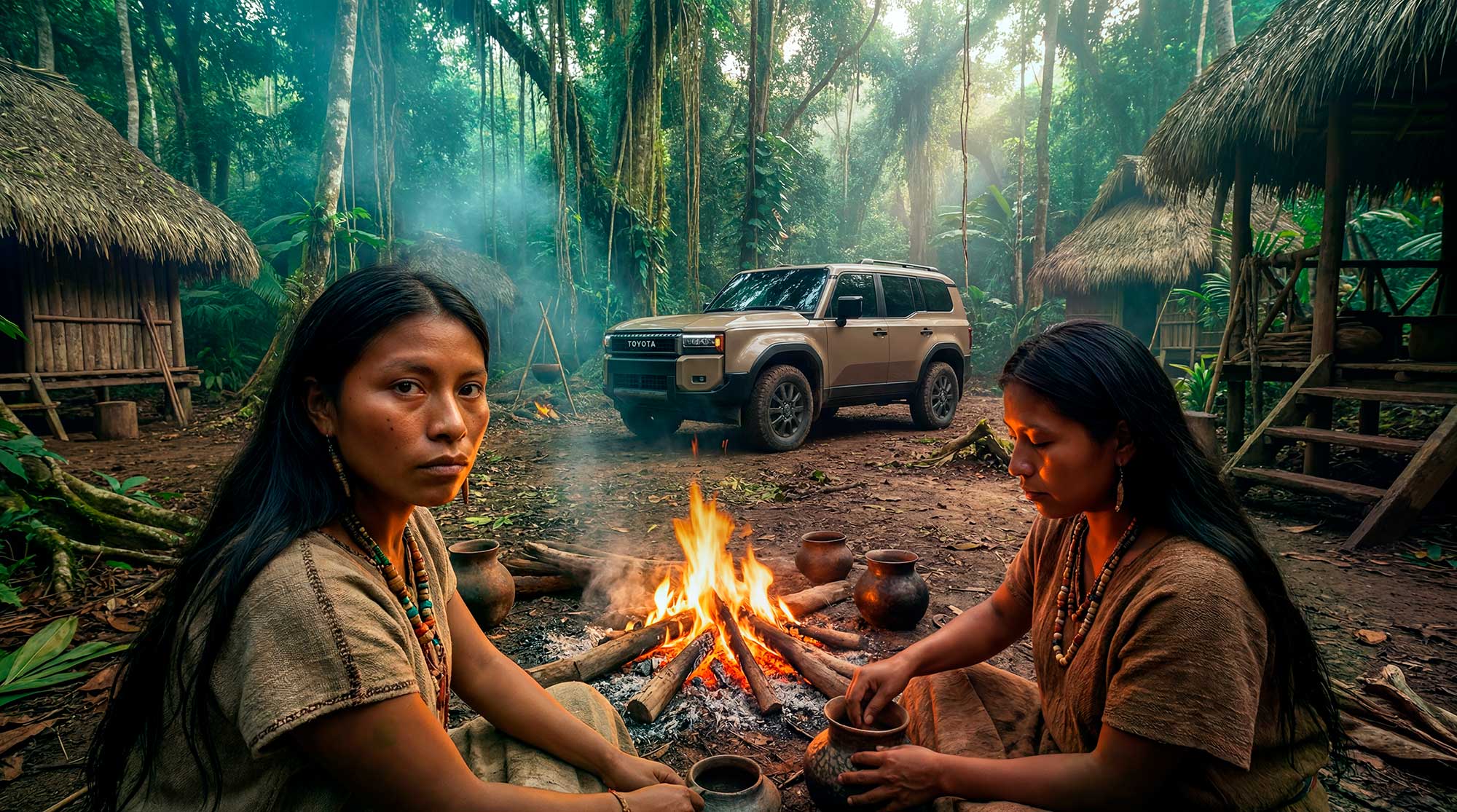
The final image brings together photography, CGI and AI without allowing any single technique to define the result.
The vehicle remains contemporary.
The environment feels primordial.
The character creates the human tension between the two.
Different production languages become one visual language.
And that is ultimately what this project was designed to explore:
not how the image was made, but how convincingly a new reality can be constructed.
For us, hybrid production is not about combining technologies for the sake of technology.
It is about choosing the right tool for every element of the image — and directing all of them toward the same visual idea.
**The tool is never the point.
The image is.**