MONO 000 — The Manifesto
Why only the cover?
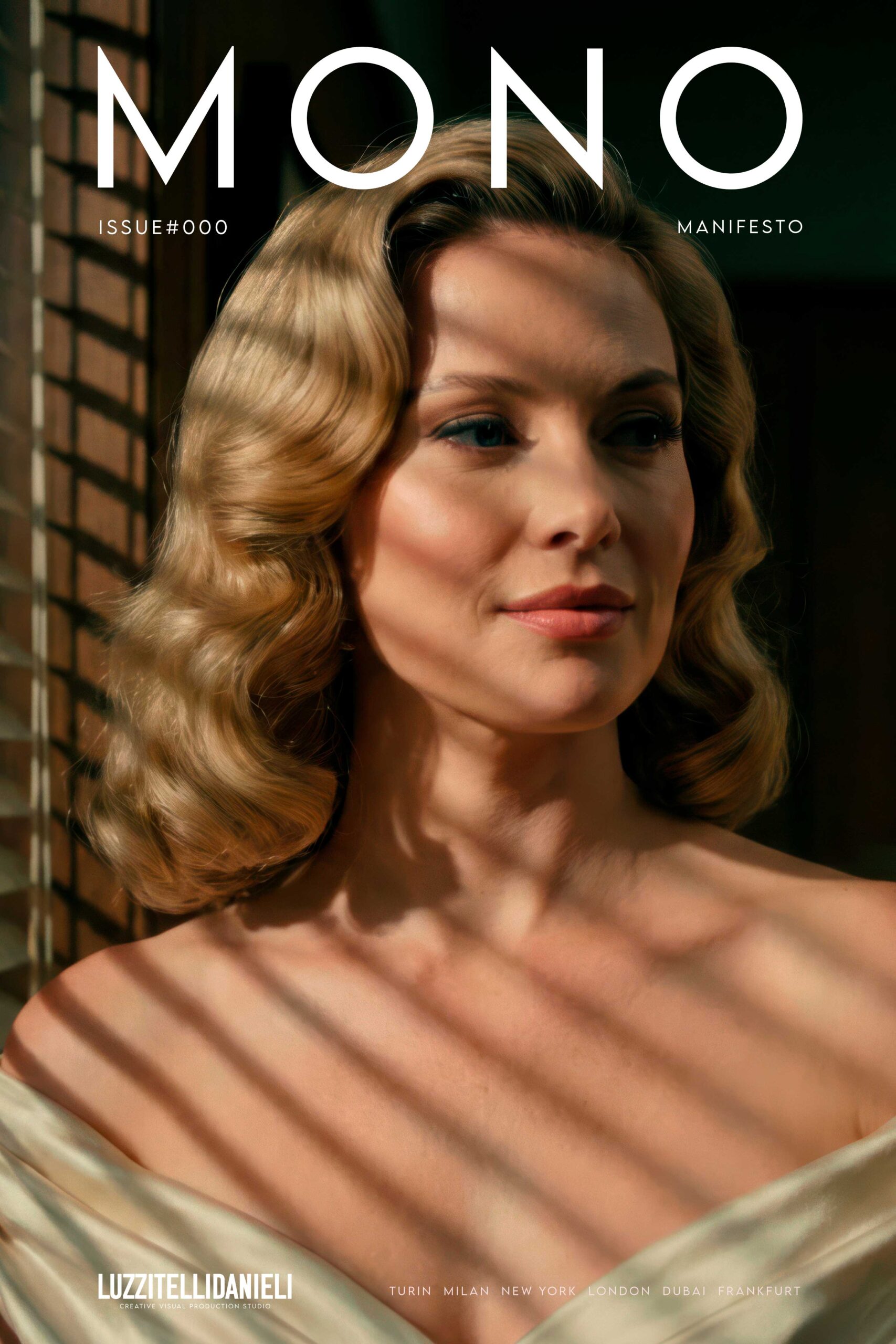
Every issue of MONO exists as a cover.
Nothing more.
The cover has always been the most powerful page of any publication. It is where an idea is distilled into its purest form.
One image.
One statement.
One point of view.
The editorial continues where the cover ends — in the reader's mind.
MONO begins there.
A Publication Reduced to One Image
MONO is a visual publication built around a simple constraint:
one issue, one image.
There are no pages to turn. No sequence to follow. No article competing for attention.
Each issue exists as a single visual statement.
The image is not an illustration of an idea.
The image is the idea.
By reducing the publication to one frame, MONO creates space for ambiguity, interpretation and visual tension.
The viewer is not told what to see.
The viewer is invited to look.
Why the Cover?
A cover is different from every other page.
It does not explain what follows.
It announces something.
It creates anticipation before the content has even been read. It establishes tone, identity and position through a single visual decision.
MONO takes that role and removes everything around it.
There is no inside.
The cover is the publication.
What traditionally introduces a magazine becomes, in MONO, the entire editorial experience.
One Image. One Point of View.
An image can contain more than information.
It can contain atmosphere, tension, contradiction, memory and possibility.
MONO treats the single image as an editorial position — a deliberate choice about what to show, what to conceal and what to leave unresolved.
Every issue begins with an idea.
But the idea is never explained completely.
It is constructed visually.
One image becomes one point of view.
Photography. CGI. AI.
MONO does not separate photography, CGI and artificial intelligence into different categories.
They are different ways of constructing an image.
Photography can capture what exists.
CGI can construct what does not.
AI can explore possibilities between the two.
The technology changes according to the idea.
The image remains the objective.
This is not a publication about technology.
It is a publication about what technology makes possible when guided by visual direction.
Reality Is Now a Creative Choice
For most of the history of photography, the relationship between image and reality was relatively clear.
A camera recorded something that existed in front of it.
That relationship is no longer absolute.
Images can now be photographed, simulated, generated, reconstructed, combined and transformed.
Reality can be captured.
Reality can be constructed.
Reality can be imagined.
Reality is now a creative choice.
MONO exists within this transition.
Not to celebrate technology for its own sake, but to investigate what happens to the image when the boundaries between photography, CGI and AI become increasingly fluid.
The Image as Research
MONO is not designed to provide answers.
It is a space for visual research.
Each issue explores a question through an image rather than through an essay.
What happens when a familiar object is placed in an unfamiliar environment?
What happens when photography becomes indistinguishable from CGI?
What happens when an image feels real even though the scene never existed?
What makes an image believable?
What makes an image memorable?
These questions do not require a conventional editorial format.
They require an image.
No Explanation
MONO deliberately resists the instinct to explain everything.
There is no long caption describing what the viewer should think.
No production breakdown required to understand the image.
No narrative imposed before the image has had the opportunity to speak.
Context may exist.
Process may exist.
But the first encounter is always visual.
Look first. Interpret later.
The Role of the Viewer
When an editorial removes text, sequence and explanation, something changes.
The viewer becomes part of the work.
Meaning is no longer delivered.
It is constructed.
Two people can look at the same image and see different things.
Neither interpretation needs to be correct.
MONO is interested in that space between what an image communicates and what the viewer brings to it.
The editorial continues in the mind of the person looking.
MONO 000
Every publication has a first issue.
MONO begins with 000.
Not Issue 01.
Not Volume One.
000 is a starting point before the beginning.
A blank position.
A reference to the moment before the system takes shape.
It is the point from which everything that follows can develop.
MONO 000 establishes the principle:
One image can be enough.
Not because there is nothing more to say.
But because sometimes the strongest editorial decision is knowing when to stop.
The Manifesto
MONO is built on a few simple ideas:
One image can carry an entire idea.
Visual direction matters more than the tool used to create the image.
Photography, CGI and AI are different methods of image construction.
Reality does not have to be photographed to feel real.
Technology is a means, not the message.
An image does not need to explain itself.
Interpretation belongs to the viewer.
The cover can be the entire publication.
And above all:
The image comes first.
Beyond the Cover
MONO may exist only as a cover.
But the idea behind the cover is deliberately open-ended.
Each issue becomes a new visual proposition.
A new image.
A new question.
A new point of view.
The publication evolves through images rather than pages, through visual research rather than conventional editorial structure.
There is no fixed answer to what MONO can become.
Only the next image.
MONO 000
One image.
One idea.
One point of view.
Nothing more.